Montra's 12-Strategy Multi-Layer Cybersecurity Framework
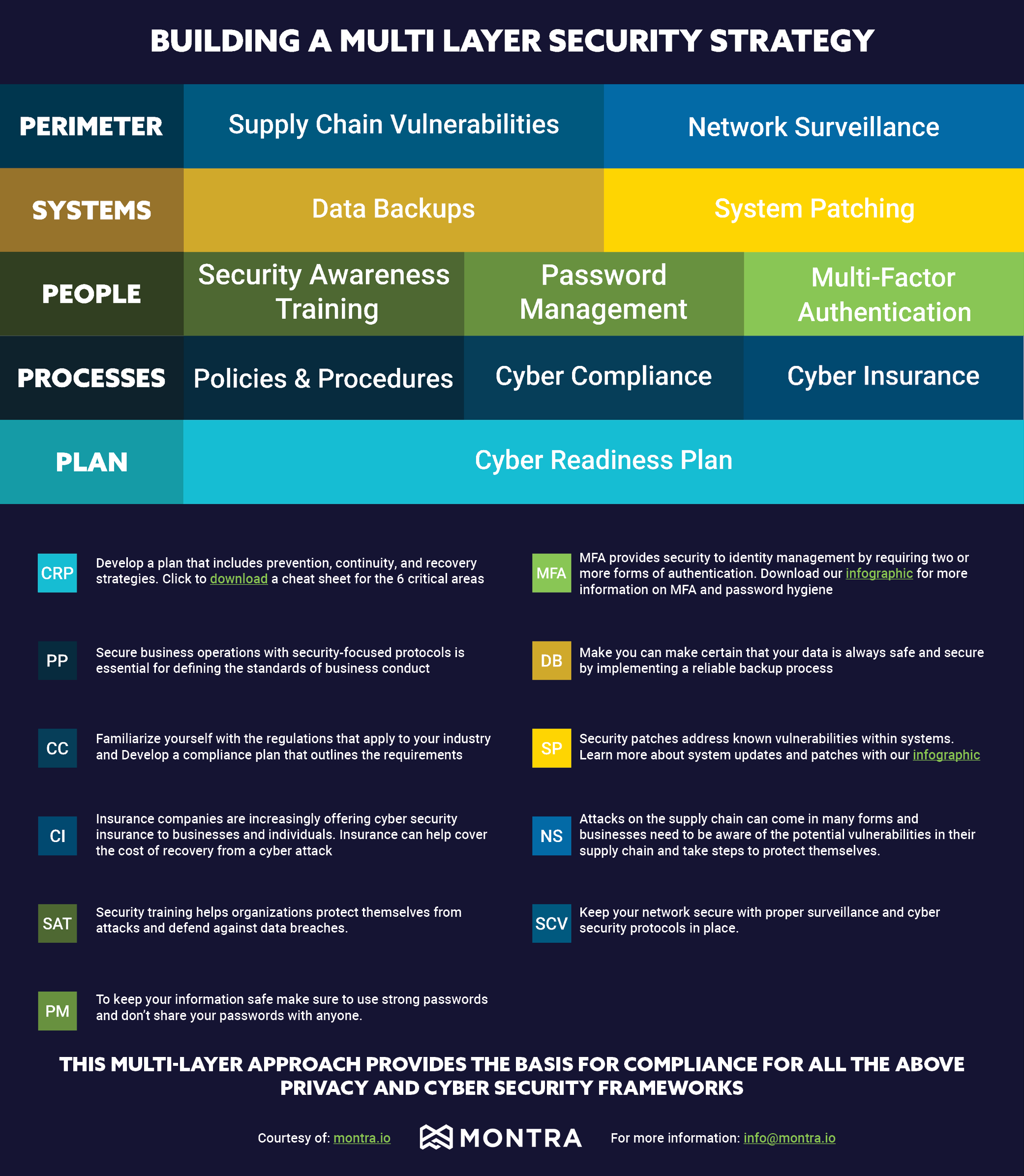
- Develop a Plan — Include prevention, continuity, and recovery strategies covering the 6 critical areas of cyber readiness.
- Establish Policies — Secure business operations with security-focused protocols that define the standards of business conduct.
- Keep Software Updated — Security patches address known vulnerabilities. Regularly update and patch all systems.
- Require Multi-Factor Authentication (MFA) — MFA provides additional security to identity management by requiring two or more forms of authentication.
- Back Up Everything — Implement a reliable backup process to ensure your data is always safe and recoverable.
- Don't Neglect Compliance — Familiarize yourself with regulations that apply to your industry and develop a compliance plan.
- Combat the Password Crisis — Use strong, unique passwords and never share them. Use a password manager to help employees comply.
- Security Awareness Training — Train employees to protect against attacks and defend against data breaches.
- Reduce Supply Chain Vulnerabilities — Attacks can come through your supply chain. Identify and address those vulnerabilities.
- Continuous Network Intelligence — Keep your network secure with proper surveillance and cybersecurity monitoring protocols.
- Get Cyber Insurance — Cyber insurance can help cover the cost of recovery from an attack. Don't skip it.
- Multi-Layer Security — This combined approach provides the basis for compliance with all major privacy and cybersecurity frameworks.
Building a Multi-Layer Security Strategy
Is your business ready to handle a targeted cyber-attack? Maybe you have been attacked and don’t even know it. According to the 2020 Thales Data Threat Report, 49% of US companies have already experienced a data breach. To help you become more proactive and effective at defending against cyber threats, we have created an infographic to provide you with the basis for compliance for 12 privacy and cyber security frameworks